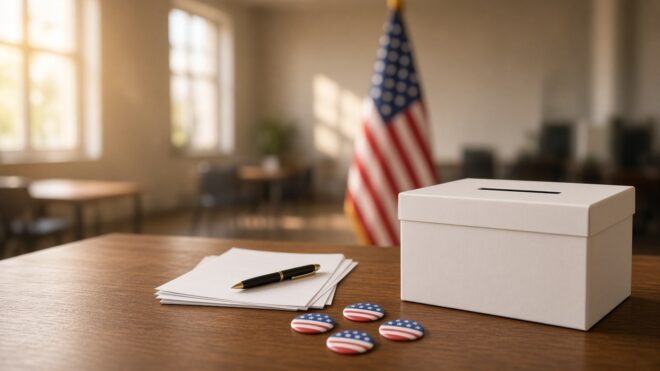
Okay, it’s Tuesday, November 3, 2026, and yep, that means Election Day is here. Maybe you’ve been meaning to figure out how to vote in the midterms and kept putting it off. Like a lot of people, you still can.
I’m not gonna wade into politics here. I’m not gonna tell you who to vote for. I’m just gonna give you the nuts and bolts. Are you registered? Where’s your polling place? What should you bring? What if something goes sideways once you’re standing in line?
One thing before we start. Rules shift from state to state and sometimes even county to county, so Ohio doesn’t work like Oregon. Think of this as a rough map, and call your state or local election office to confirm things before you walk out the door.
What’s on the Ballot This Year?
Sure, midterms aren’t quite as exciting as a presidential election, but they’re just as important. Here’s what’s up for grabs.
- The U.S. House: all 435 seats, because each member serves a term of two years.
- The U.S. Senate: 35 seats, including special elections in Ohio and Florida.
- Governors: 36 states are picking one this year, and that list has California, Texas, New York, Florida and Pennsylvania on it.
- Bottom of the ballot: you’ll often see state legislators, judges, mayors and school board members, plus local ballot measures if your state has them.
That’s where your single vote can truly make a difference. A school board race could be decided by a few hundred votes. Can’t picture what you’ll be voting on? Many county election websites have a sample ballot you can review in a few minutes.
Step 1: Check Your Voter Registration
Begin here, and don’t worry, it’s a minute or two at most. Head to vote.gov, click your state, and it drops you onto your state’s own site. That’s where you can see for yourself whether you’re registered.
Moved recently? Changed your name? Missed a few elections? Check anyway. Voter rolls get cleaned up from time to time, and it’s better to find a problem tonight than at the check-in table.
Voter Registration Deadline for 2026
Most states, though, closed registration weeks ago, usually a month or so before the big day. A few do allow in-person registration on Election Day. Some also have same-day registration during early voting, so you can register and vote in one go. North Dakota is the odd one out. It has no voter registration at all.
Rules really do differ here, so look up your state on vote.gov. You can also see which states offer it on the NCSL same-day registration page.
Step 2: Find Your Polling Place Today
Voting in person today? Most states want you at the polling place assigned to you, and that might not be where you went last time. Locations get moved, mostly after redistricting, and several states redrew their maps this cycle, so don’t just go on autopilot.
Your state election website (reached through vote.gov) or your county election office will have the address. A few counties use “vote centers,” where any registered voter in the county can cast a ballot. Many don’t, though. So confirm that before you drive across town.
Election Day Hours
Every state sets its own hours. Plenty of polls open at about 6 or 7 in the morning and shut at 7 or 8 at night, local time. That’s only a pattern, not a promise, so look up the exact hours for your county.
Here’s one to remember. Say you’re still in line when the polls close. Stay right there, because you still get to vote. Don’t let a long wait talk you out of it.
Step 3: Know What to Bring With You
Honestly, ID rules are the part that trips people up most, mainly because every state does its own thing. Roughly, they land in four buckets:
- Strict photo ID states: you’ve got to show a specific photo ID. Think driver’s license, state ID, passport or military ID, nothing fancier.
- Photo ID requested: you’re asked for it, but forgetting yours isn’t always the end of the road. In many cases you can sign an affidavit and still vote.
- Non-photo ID states: a bill from the electric company or a bank statement with your name on it might be enough.
- No document required: a few places skip documents, and the poll worker just matches your signature against the one on file.
For the full state-by-state list, the NCSL voter ID page is where I’d look. Here’s a wrinkle: if you’re voting for the first time and you registered by mail, federal law says you may be asked for ID, even where other voters aren’t.
What to Bring: A Quick Checklist
- Your ID. Your state’s accepted kind, and yes, bring it even if you figure you won’t be asked.
- Notes or a sample ballot, if you’ve already made up your mind. Phones in the booth aren’t allowed everywhere, though, so look that up before you rely on yours.
- Water and a snack, since lines can drag on.
- Patience, mostly. Poll workers are mostly neighbors who gave up their whole Tuesday, and a thank-you costs nothing.
And don’t wear the campaign gear. Buttons, hats, shirts, leave them at home, since lots of states ban them near the polls.
Voting Early or by Mail
Plenty of folks have voted already. Most states let people vote early in person, but in a lot of them that wrapped up before today, so it’s probably off the table for you.
Maybe you’ve got a mail or absentee ballot still sitting on the kitchen counter. Deadlines depend on the state. A few count ballots postmarked by Election Day, others want them in the election office by the time it closes. Mailing it now is a gamble, to be honest. Your better bet is a drop box or walking it into the election office.
The U.S. Election Assistance Commission (EAC) explains mail voting and plenty else in plain English.
If Your Name Isn’t on the List
Don’t panic, and don’t walk out. First thing, double-check that you’re at the right polling place, because a wrong precinct is a really common reason.
Right spot, but your name’s still not there? Ask for a provisional ballot, which federal law generally gives you the right to do. Officials look into whether you’re eligible after the fact, and your vote counts if you are. In some cases you’ll have to take ID or other info to the election office within a few days. The poll worker can tell you what’s next.
Still stuck after that? Your local election office can help, and the phone number is on your county’s election website.
Key Dates
- Tuesday, November 3, 2026: Election Day, which is today.
- Registration deadlines: these change from state to state. Most have come and gone, though a few places still do same-day registration.
- Mail ballot return: read the instructions that came with your ballot today, because the rules aren’t the same everywhere.
- After Election Day: official results can take a few days, and some races might end up in a runoff.
Midterms 2026 Voting Guide: FAQ
When are the 2026 midterms?
They’re today, Tuesday, November 3, 2026. Poll opening and closing times differ in every state, so pull up your state or county election website to get yours.
How can I tell if I’m registered?
Go to vote.gov, pick your state, and click through to its official registration lookup. It’s quick.
Is it too late to register for the 2026 midterms?
Maybe. A lot of deadlines are behind us now. A few states will still let you register right at the polls, though. Vote.gov has the details for your state.
Will I need ID to vote?
That depends on your state. A handful of states want photo ID, plenty accept other documents, and a few don’t ask for anything. For a straight answer, open the NCSL voter ID page or your state’s election site.
What if my name isn’t on the list?
Before anything else, confirm you’re at the right polling place. If you are and your name’s still missing, ask for a provisional ballot. Staff will look into your eligibility afterward and count the ballot if you qualify.
Final Thoughts
Voting is easier than it looks, really. Make sure you’re registered. Find your polling place. Take the right ID with you, and don’t wait till the last minute to go. Do those and you’re set. Something confusing? Call your local election office, since they have the last word, and they’d much rather help you now than see you turned away at the polls.